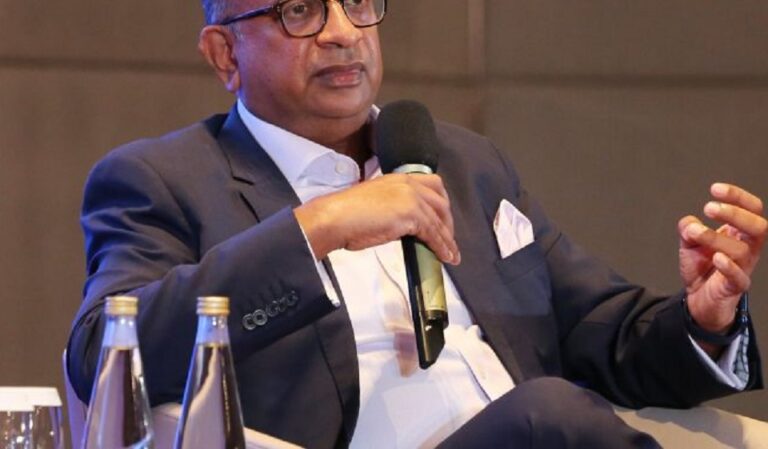
Business confidence in Sri Lanka is at its lowest in years, according to the chairman of the Ceylon Chambers of Commerce Vish Govindasamy.
Sri Lanka Business Confidence dropped by 39.6 % in Nov 2022, compared with a decrease of 44.0 % YoY in the previous month.
“Business confidence is probably at its lowest since I’ve been in business. It’s probably the most difficult time that we have faced. But we are resilient,” he said.
In Sri Lanka, the Business Condition Index measures entrepreneurs’ sentiment about current business situations and expectations about business conditions. It includes Profitability, Skilled Labour Availability, Demand, Sales and Capacity Utilization.
“A slight dip in the rate of inflation fails to inspire business people, as gloom pervades the private sector,” leading business magazine LMD said, in its January edition.
Nielsen IQ’s Director – Consumer Insights Therica Miyanadeniya noted in LMD: “Year 2022, one of the most controversial and difficult in the history of Sri Lanka, is coming to an end.
As one looks back, the country has weathered turbulent times with untold hardships faced by businesses and people alike.”
“Though the fuel crisis has subsided somewhat, the cost of goods and services is keeping the rate of inflation high … However, inflation is showing signs of going down with the National Consumer Price Index (NCPI) at 70.6% in October, compared to less than 75% in September,” she added.
Miyanadeniya asserted that: “the optimism that was evident in November has been quenched, and this disappointment and the continued hardships faced by business and the populace at large are also reflected in both the LMD-NielsenIQ Business Confidence Index and the Consumer Confidence Index.”
LMD reports that 75% of executives responding to the exclusive survey carried out in the first week of December anticipate that the economy in general ‘will get worse’ in the year ahead (up from 59% in November) and only one-in-10 say it will ‘stay the same’ (down from 20% in November).
“Pessimism is evident re expectations of sales volumes with only 41% of executives anticipating an increase in the next 12 months (51% in November) and 17% stating that sales volumes would ‘stay the same’,” a spokesperson for LMD added.
The magazine also noted: “Once more, there’s no significant change in executive opinion with regard to sales volumes compared to the same time last year with only 27% observing an increase in business (29% in November and 27% in October).”
LMD’s publisher, Media Services, said the latest edition of the magazine has been released. Its digital edition is also available on WhatsApp and the publisher’s social media platforms.
Business confidence in Sri Lanka hits rock bottom,
Rubber exports slight decline to US $900 million in 2022 from $ 1 billion in 2021
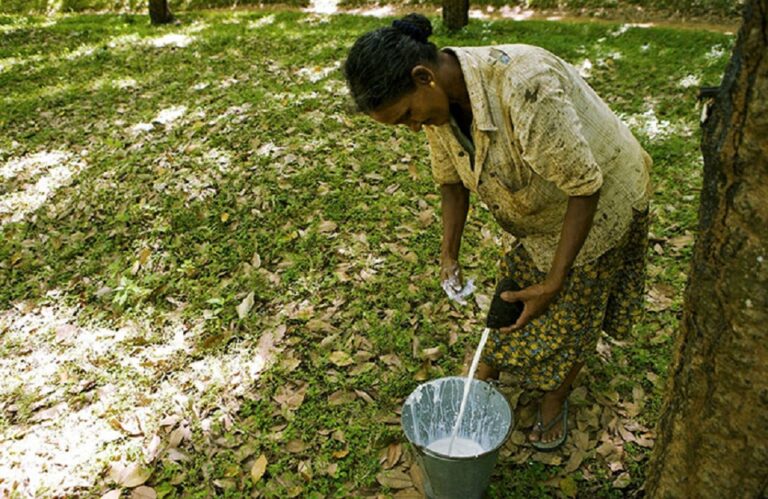
Sri Lanka has earned Rs 327 billion (US $900 million) in 2022 by exporting rubber products and this was a slight drop from 2021 revenue of $1 billion, the Rubber Development Department DG Madawa Kulasuriya said.
However, the South Asian country intends to increase revenue from rubber products to $3 billion by 2025, he revealed.
Major markets for finished rubber products are the US, Germany and Japan, while Pakistan, Germany and Japan are major markets for natural rubber from Sri Lanka, he added.
Sri Lanka is one of leading natural rubber exporters in the world, and in 2021 around 70 per cent of income from rubber exports came as tyres, according to official data.
Government is set to address challenges present in the rubber industry and to attract foreign investment with an aim to expand the local rubber industry in Sri Lanka,
The Sri Lanka Association of Manufacturers and Exporters of Rubber Industry (SLAMERP) and the Board of Investment (BOI) are also currently in the process of initiating a new rubber investment zone in Sri Lanka to improve manufacturing
Sri Lanka is considering controlling rubber imports for export industries in a bid to keep domestic rubber prices up, Cabinet spokesman Minister Bandula Gunawardana said.
Sri Lanka export industries approved by the Board of Investment are allowed to import rubber when required. Some tyre firm in particular need lower grade rubber which are not available in sufficient quantities.
Plantations Industries Minister Ramesh Pathirana had informed cabinet that authorities were looking to control rubber imports to keep domestic prices up, Gunawardana said. Sri Lanka’s latex prices in particular had dropped reducing incomes for farmers, he said.
In the year 2017, the Sri Lankan Ministry of Plantation Industries introduced a 9-year Rubber Master Plan aimed to help, develop, and expand the rubber industry’s market share.
As the global demand for rubber products is expected to increase, Sri Lankan rubber manufacturers can expect to earn an income of $3 billion from exports by 2026.
Under the 9-year plan, the Sri Lankan government plans to increase the land area under rubber cultivation by 3000 hectares. This means increasing the production of raw materials in the future by increasing rubber production in traditional rubber growing areas.
And as a result, new plantations will be started in places like Monaragala, Vavuniya, Hambantota, Ampara, and Puttalam.
According to export Development Board (EDB) 70 percent of natural rubber production in Sri Lanka is consumed by the rubber products manufacturing sector for local sales or predominantly for the lucrative export market.
Even so, Sri Lanka is only capable of producing 50 percent or less of the demand, thereby resulting in 50percent of raw materials being imported from other countries to facilitate local manufacturers.
SL attracts over 60,000 tourists in 19 days this month nearing 105,000 target
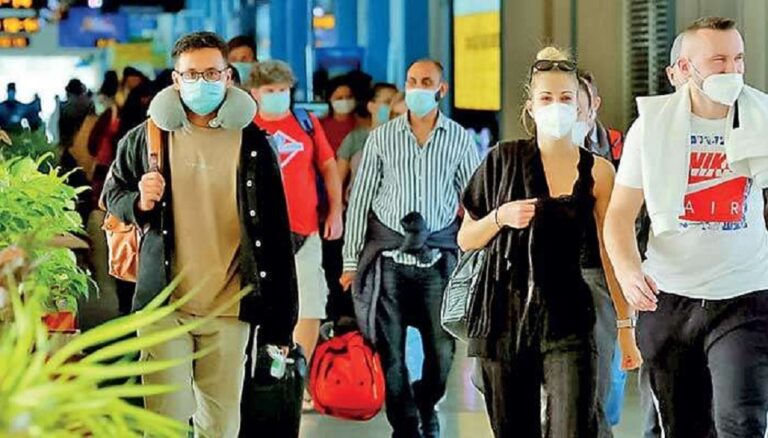
With its golden beaches, towering mountains, ancient monuments and stunning wildlife all encircled in the pearl of the Indian Ocean, Sri Lanka is set to meet the target of 105,000 tourist arrivals for January having already received a record 62,334 tourists, tourist arrivals in the first 19 days of January.
The island nation is on its way towards meeting an end-of-year revenue target of US$ 2.8 billion from an anticipated 1.55 million arrivals
As per the latest data released by the Sri Lanka Tourism Development Authority (SLTDA), a total of 20,875 travelers arrived in the first week, while 23,295 in the second week and 10,445 in the other three days, the provisional data released by the Sri Lanka Tourism Development Authority showed.
Sri Lanka Tourism Development Authority (SLTDA) Chairman Priyantha Fernando said that tourist arrivals for 2022 were at a satisfactory 719,978, which marked a 270-percent increase from the 194,495 tourists who traveled to Sri Lanka in 2021.
Mr Fernnado disclosed that a 10-year national tourism policy will be introduced in early January.
“This will help the industry have a clear vision of the industry objectives and goals. It includes regional development, increasing female participation, identifying new tourist attractions, markets and so on,” he said.
SLTDA Chief noted that around 33 to 35 percent of the travelers coming to Sri Lanka are repeat customers and it was important to ensure there are new attractions for them as well as to promote the destination through word of mouth.
The boost in arrivals was largely influenced by the Russian tourist, maintaining the lead ahead of India. Daily arrivals have also reached 3,281 compared to over 2,000 levels last year showing a significant improvement.
Russia accounted for 15,572 or 25percent of the total tourists, followed by India with 7,853 or 13percent, Germany 5,668 or 9 percent, UK with 5,033 or 8 percent, and France with 2,799 or 4 percent.
Originally for 2023, Sri Lanka Tourism set an ambitious target of 1.5 million arrivals and an income of $ 5 billion by attracting high-end travellers who spend over $ 400 per day from the current $ 200.
Despite it being a ‘crisis year’ Sri Lanka ended 2022 with 719,978 tourists, up by 207percent over 2021. Though missing the original target of 750,000 arrivals, the Minister said the provisional data shows that the earnings target of $ 1.2 billion was achieved last year.
Sri Lanka Rupee appreciates by 0.3 per cent against US Dollar

By January 20, 2023, the Sri Lankan Rupee has appreciated by 0.3 per cent against the US Dollar, a report by the Central Bank of Sri Lanka (CBSL) revealed.
The sell price of the US Dollar marks Rs. 371.38 and the buy price, Rs. 360.55.
The Sri Lankan Rupee in its appreciation against foreign currencies also indicates an appreciation of 1.5 per cent against Euro, 2.5 per cent against GBP, 1.6 per cent against Indian Rupee, and 2.6 per cent against Japanese Yen, according to report.
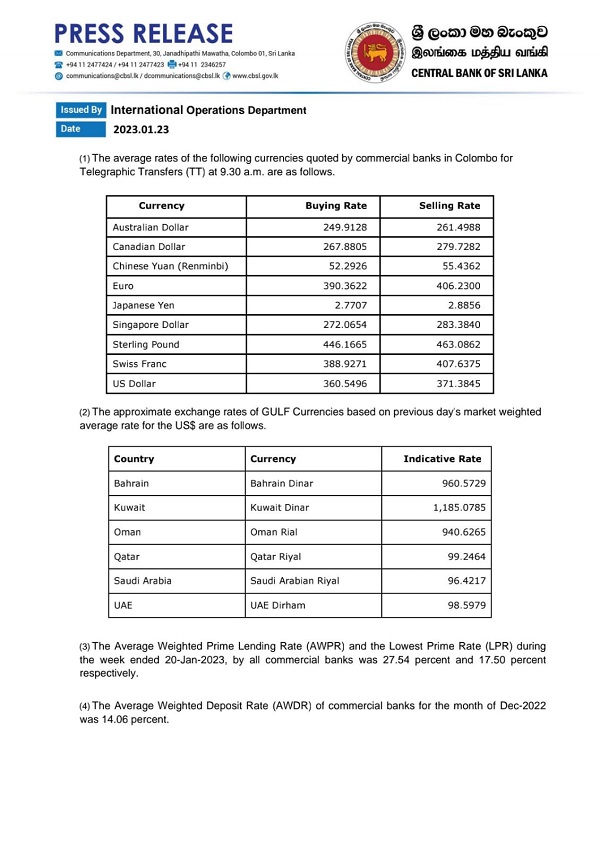
The CBSL in December 2022 bought US $274.42 million and sold US $170.64, and the Sri Lankan Rupee had depreciated by 44.8 per cent against the US Dollar in 2022, the report adds.
MIAP
School trips to be restricted to 100km per day
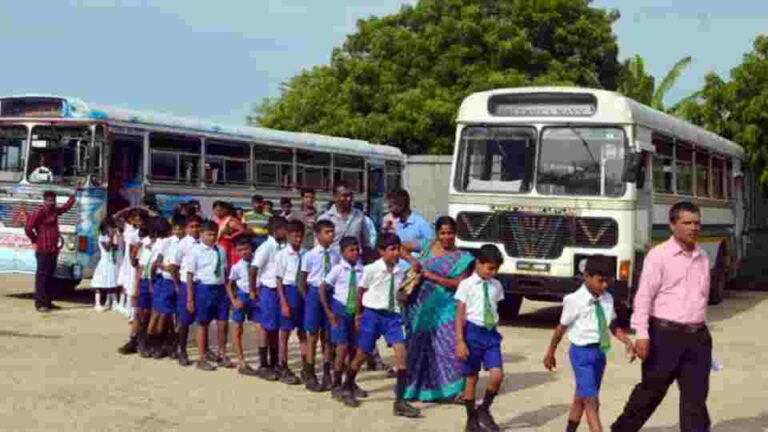
The Ministry of Education announced that the distance which a school field trip can go up to will be restricted to 100 kilometres per day.
Accordingly, Ministry officials are working on introducing new laws allowing school tours within a 100 kilometres distance per day, and returning the students before 6.30 pm on tour days.
A circular is being formulated in this regard, according to reports.
The move comes in following the fatal accident in Nanuoya, where a bus carrying students of Thurstan College, Colombo collided with a van and a three-wheeler killing seven people, including three children. The bus driver who was arrested for negligent driving was remanded.
MIAP
Much awaited ‘Gajaman’ now hits theatres

‘Gajaman,’ the much awaited first ever Sri Lankan 3D animation movie is now being screened in cinemas.
The first ever Sri Lankan 3D motion picture has been developed using motion capture technology and is based on the beloved comic character ‘Gajaman’ the henchman by Camillus.
Cartoonist Camillus Perera’s ‘Gajaman’ was one of the most popular comic series that appeared in ‘Sathsiri’ magazine and was originally created in the 1960s. Being critically acclaimed, ‘Gajaman’ was a commercial success that it even gained its own newspaper.
‘Gajaman’ movie is directed by Chanaka Perera and produced by John Fonseka and Chamika Jinadasa.

MIAP
Showers or thundershowers to continue: Met Dept

Showers or thundershowers will occur at times in Eastern, Uva and North-central provinces and in Hambantota district, and at several places elsewhere over the island during the afternoon or night, announced the Department of Meteorology in a statement today (23).
General public is kindly requested to take adequate precautions to minimise damages caused by temporary localised strong winds and lightning during thundershowers.
Marine Weather:
| Condition of Rain: |
| Showers will occur at times in the sea areas off the coast extending from Hambanthota to Kankasanthurai via Batticaloa, Trincomalee and Mullaitivu. |
| Winds: |
| Winds will be north-easterly and wind speed will be (25-35) kmph. Wind speed may increase up to (40-45) kmph at times over the sea areas off the cost extending from Colombo to Galle via Puttalam, Kankasanthurai, Trincomalee, Batticaloa and Hambantota. |
| State of Sea: |
| Sea areas off the coast extending from Colombo to Galle via Puttalam, Kankasanthurai, Trincomalee, Batticaloa and Hambantota, will be fairly rough at times. The other sea areas around the island may be slight to moderate. Temporarily strong gusty winds and very rough seas can be expected during thundershowers. |
MIAP
Foreign Minister to visit Saudi Arabia
Foreign Affairs Minister Ali Sabry is set to make an official visit to the Kingdom of Saudi Arabia from January 23 to 27 on an invitation of his Saudi Arabian counterpart Prince Faisal bin Farhan Al Saud.
Sabry will be meeting the Saudi Arabian Foreign Minister and discussing further enhancement of the cordial bilateral relations between the two nations.
In Addition, the Minister will also meet with the senior officials of the Islamic Development Bank, the Organization of Islamic Cooperation, the Gulf Cooperation Council and the Governors of Mecca and Medina.
MIAP
Humanitarian Assistance & Disaster Relief exercise of CARAT – 2023 gets underway
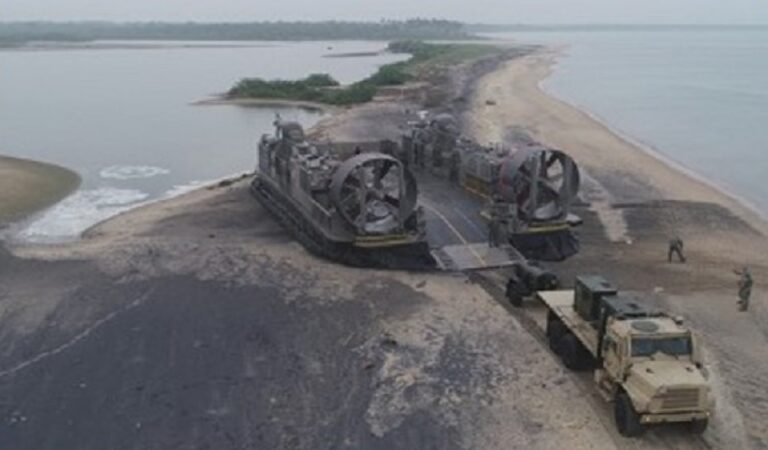
The Marine Exercise (MAREX) of Cooperation Afloat Readiness and Training (CARAT) 2023, commenced in Mullikulam on 21st January 2023 and it was augmented by personnel from the U.S. Marine Corps, Sri Lanka Navy Marines, Special Boat Squadron, Rapid Action Boat Squadron, and Naval Infantrymen. Accordingly, the Humanitarian Assistance & Disaster Relief (HADR) exercises of MAREX were held at the beach area of Mullikulam in the Northwestern Naval Command today (22nd January).
The exercise saw two (02) Landing Craft Air Cushion (LCAC) of the U.S. Navy transferring troops, Logistics and vehicles ashore for HADR drills. The training exercise also helped both partners to coordinate and communicate with one another in a simulated environment and improve each other’s skills.
Commander Northeastern Naval Area, Rear Admiral Nishantha Peiris and a group of senior officers from the command were present on this occasion to inspect the proceedings.
GCE Advanced Level Examination commences
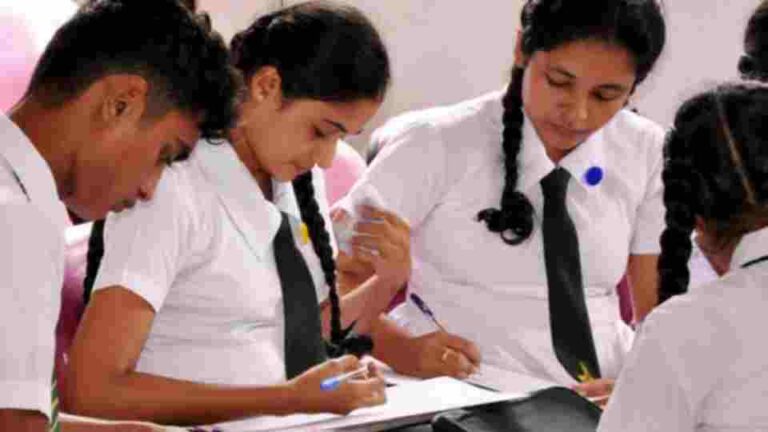
The GCE Advanced Level Examination of 2022 commences from today (23) at 08 am, at 2,200 centres across the island.
331,709 candidates, both school and private applicants, will be sitting for the exams.
The Department of Examinations has approved 1o minutes of additional time for the essay papers of the exams.
MIAP