Home Blog Page 1924

What it will take to fix Sri Lanka’s economy

0

n the evening of July 21st, a relaxed mood prevailed in Sri Lanka’s presidential secretariat on the seafront of Colombo, the capital. A handful of protesters milled about in the entrance hall, which they had occupied on July 9th and turned into a library full of donated books. They said they were planning to return the premises to the state the following day, having succeeded in driving from office Gotabaya Rajapaksa, the disgraced former president.

The new government had other ideas. Not long after, in the early hours of July 22nd, soldiers and police in riot gear evicted the remaining protesters from the building, tore down their tents outside and put up metal barricades. They arrested several protesters and injured a handful badly enough to send them to hospital.

The raid was an inauspicious start to the presidency of Ranil Wickremesinghe, who was elected by parliament on July 20th, one week after Mr Rajapaksa fled the country (he resigned the next day). The new president is already unpopular. Many Sri Lankans disapproved of his willingness in recent months to work with the former one. He accepted the job of prime minister in May after the leader of the opposition refused to take it without a guarantee that Mr Rajapaksa would resign.

Suppressing protests is unlikely to inspire goodwill among the public. Yet goodwill is precisely what Mr Wickremesinghe will need over the coming months. Without it, his government is unlikely to survive the pain it is about to inflict in order to return the country to some semblance of economic stability.

Mr Rajapaksa’s departure has helped calm the political mood in the country, but it has done nothing to change its economic predicament. Sri Lanka defaulted on its external debts in May. The rupee has lost almost half of its value against the dollar since the central bank abandoned its peg in March. Inflation was 55% in June; the bank’s governor expects it to hit 70% before it begins to decline. Food-price inflation has already passed 80%. Government revenue, at around 8% of gdp, covers less than half of spending, which is closer to 19%. The lack of foreign currency means that heavily regulated imports such as fuel and medicine remain scarce while others are eye-wateringly expensive.

Fixing the mess will be extremely difficult. The immediate concern for Mr Wickremesinghe’s government is addressing its debt problem by coming to an agreement with the International Monetary Fund (imf), and unlocking fresh credit. Those close to the negotiations say the latest round of talks in June went well. Yet the imf is closely watching the new government’s relationship with the opposition, which could end up in charge of seeing through a three-year imf programme (Sri Lanka’s 17th). It does not help that the country has a history of not completing programmes if it suits politicians.

But even if the government convinces the imf that there is broad support for reforms, negotiations with creditors must be completed before the Fund can begin disbursing money. China and Japan are Sri Lanka’s biggest bilateral creditors, each accounting for 10% of its $32bn in external debt. Private bondholders hold about a third. China, which has lent big sums to other economies that are now also facing trouble, is seen as reluctant to accept incomplete repayment (a so-called “haircut”) lest it set a precedent. It prefers to roll over debt. Other creditors are unlikely to accept haircuts if China will not. Meanwhile, hedge funds specialising in distressed debt have begun to buy up Sri Lankan bonds and will demand to be paid back in full, further complicating negotiations. Optimists say the imf board could approve the deal—the last step before funds are released—as early as the end of the year. Others see talks dragging on for a year or longer.

Even in the best-case scenario, ordinary Sri Lankans face an extremely difficult couple of years. In an effort to tame inflation, the central bank has sharply raised interest rates twice since April, to 15.5%, in effect forcing a recession. Almost two-thirds of Sri Lanka’s 8m workers are employed in the informal economy and depend on daily wages. Many have already lost their jobs. Many more will do so over the coming months. Even those who manage to find work will find the value of their wages much reduced by inflation, as it will be months before the central bank’s policies start to temper it. Inequality will rise, too, as professionals on dollar incomes will feel the squeeze less than those earning wages in rupees.

The impact of monetary tightening will be compounded by similar policies on the fiscal side. To fulfil the conditions of the imf programme, the government will be forced to cut spending and raise taxes. A pay freeze in the public sector and stays on infrastructure investment may curtail spending, but deep cuts will be difficult given that expenditure on welfare payments will have to rise to cushion the impact of the crisis. So the main emphasis is likely to be on raising revenue.

In his previous job as prime minister, Mr Wickremesinghe had already restored some taxes cut by Mr Rajapaksa’s government in 2019, raising the value-added tax from 8% to 12%. If the current government decides to finish the job, the corporation tax would return to 30%, from 24%, and the top rate of income tax would rise to 34%, from 18%. Even then, the government would still have to find more money.

It could remove corporate-tax exemptions in a range of sectors, broaden the tax base (only a fraction of the population pays income tax) and sell off state-owned enterprises such as Sri Lankan Airlines. Though possibly beneficial in the long term, in the short term such policies will cost jobs and compound the misery of an already beleaguered country. The economy is expected to shrink by at least 7% this year.

Opposition members believe that Mr Wickremesinghe is serious about reform. But they are dubious about his cabinet, which contains many of the same people who watched over Mr Rajapaksa’s mismanagement. “Nobody in this new cabinet has ever been in favour of reform,” says Harsha de Silva of Samagi Jana Balawegaya, an opposition party. “Now they will suddenly advocate for it in parliament?”

Adding reform-minded members of the opposition to the cabinet would go some way towards addressing those concerns, as well as adding legitimacy to Mr Wickremesinghe’s government. Once he has set the course, the new president may be best off acknowledging that, like his country, he is living on borrowed time. Over the past few months, many Sri Lankans who enthusiastically voted for his predecessor’s party three years ago have changed their minds. A country heading for painful reform can ill afford this mismatch between the people and their representatives. Only fresh elections can resolve it. ■

This article appeared in the Asia section of the print edition under the headline “Obstacle course”

THE ECONOMIST

Live telecast in celebration of 76th Independence Day of India on Aug 15

0

A flag hoisting function is being organised at India House on the occasion of 76th Independence Day of India on 15 August 2022 from 0830 hours.

Live telecast of the programme can be viewed on the following link (Swami Vivekananda Cultural Centre Colombo).

https://www.facebook.com/swamivivekanandaculturalcentre.colombo

https://www.facebook.com/swamivivekanandaculturalcentre.colombo/videos/823070428684280

MIAP

Foreign Ministry comments on Chinese vessel Yuan Wang 5

0

The Ministry of Foreign Affairs wishes to refer to the Chinese vessel YUAN WANG 5.

On 28 June, 2022, the Embassy of the People’s Republic of China in Colombo informed the Ministry via Diplomatic Note that the Chinese Scientific Research Ship YUAN WANG 5 is scheduled to pay a port call at the port of Hambantota from 11-17 August, 2022 for replenishment purposes. While no rotation of personnel were to take place during the call, the Government of Sri Lanka was requested to provide necessary assistance and positive consideration to the request by the Embassy of the People’s Republic of China.

The Ministry, as per accepted practice related to such requests for ‘diplomatic clearance’, circulated the said request among relevant stakeholders in Government for approval – the Ministry of Defence, the Sri Lanka Navy and the Telecommunications Regulatory Commission of Sri Lanka (TRCSL).

Following receipt on 7 July, 2022 of security clearance from the Ministry of Defence for the visit of the vessel for replenishment purposes during the stipulated period, as well as a No Objection Letter from the TRCSL for the use of frequencies and communication equipment subject to non-interference and non-protection basis,  diplomatic clearance was conveyed to the Embassy of the People’s Republic of China  by the Ministry on 12 July, 2022 for the said vessel to make a port call at the port of Hambantota for replenishment purposes. The following conditions highlighted by the Ministry of Defence were also stated – keeping the Automatic Identification System (AIS) switched on within the EEZ of Sri Lanka and no scientific research to be conducted in Sri Lankan waters.

Subsequently, in light of certain concerns raised with the Ministry, the Government of Sri Lanka requested the Embassy of the People’s Republic of China, by Diplomatic Note dated 05 August 2022, to defer the visit of the vessel to Hambantota port until the conduct of further consultations on the matter.

The Government has since engaged in extensive consultations at a high level through diplomatic channels with all parties concerned, with a view to  resolving the matter in a spirit of friendship, mutual trust and constructive dialogue, taking into account the interests of all parties concerned, and in line with the principle of sovereign equality of states.  In light of concerns raised, the Ministry also sought further information and material that could assist in consultations on the matter.

On 12 August 2022 the Embassy of the People’s Republic of China informed the Ministry via Diplomatic Note  that the Vessel YUAN WANG 5 was scheduled to arrive in the port of Hambantota on 16 August, 2022 and applied for clearance for replenishment purposes for the new dates 16 to 22 August, 2022.  Having considered all material in place, on 13 August, 2022 the clearance to the Embassy of the People’s Republic of China was conveyed for the deferred arrival of the vessel from 16-22 August, 2022.

The Ministry wishes to reiterate Sri Lanka’s policy of cooperation and friendship with all countries.  Security and cooperation in the neighbourhood is of utmost priority. It is Sri Lanka’s intention to safeguard the legitimate interests of all countries, in keeping with its international obligations.The Ministry is deeply appreciative of the support, solidarity and understanding of all countries, especially in the current juncture when the country  is in the process of addressing severe economic challenges and engaging in multiple domestic processes to ensure the welfare of the Sri Lankan people.

Ministry of Foreign Affairs

Colombo

13 August, 2022

Ship carrying crude oil to arrive in SL tonight. Refinery to resume next week

0

A ship carrying 100,000 metric tonnes of crude oil is set to arrive at the Colombo Port tonight, revealed Energy Minister Kanchana Wijesekara.

Its condition inspection will be carried out tomorrow and according to the Minister, the Sapugaskanda Oil Refinery is expected to resume its operations by the middle of next week using the stock.

Meanwhile, Sri Lanka will receive another consignment of crude oil of 120,000 metric tonnes by August 23 – 29 and both of these stocks are Russian Ural Crude Oil, said Wijesekara.

MIAP

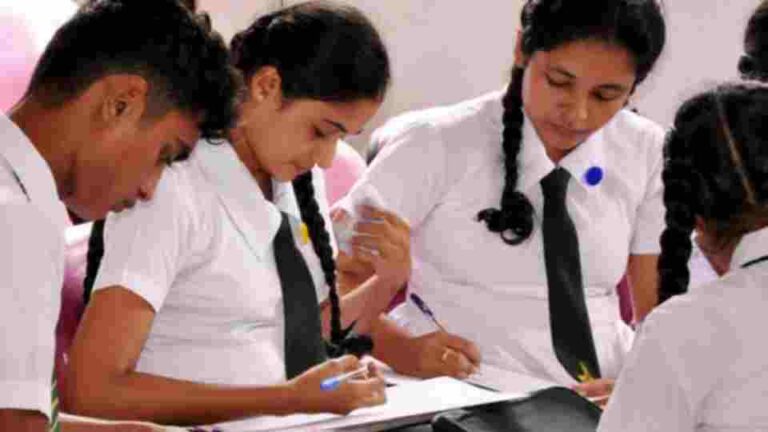
Education Ministry makes special announcement on schools

0

All government and government-approved schools will be open five days a week during normal hours from next week, the Education Ministry said in a special statement.

MIAP

SLPP wants its old crew back in Cabinet!

0

The Sri Lanka Podujana Peramuna (SLPP) has reportedly urged President Ranil Wickremesinghe to reenter a group of former ministers including Johnston Fernando, Namal Rajapaksa, Mahindananda Aluthgamage and Rohitha Abeygunawardena to the Cabinet in the new all-party government.

Among the nominees are also former ministers Pavithra Wanniarachchi, S.B. Dissanayake and S.M. Chandrasena. The new Cabinet of the all-party government is due to be appointed next week.

However, President Wickremesinghe has not agreed to the suggestion to date, according to sources.

Meanwhile, civil movements and trade unions urged the President never to agree to such proposals. Giving Cabinet positions to people like Fernando, Rajapaksa, Aluthgamage and Abeygunawardena could provoke the emergence of another struggle against the government, they pointed out.

Should these people be given ministerial posts again, a group of opposition politicians who have also agreed to accept ministerial posts in an all-party government may completely change their mind, they revealed.

A special discussion in this regard is due to be held tomorrow as well, sources added.

President issues extraordinary gazette lifting Glyphosate ban!

0

President Ranil Wickremesinghe has issued an extraordinary gazette lifting the ban imposed on the importation of pesticides containing glyphosate, effective from August 05.

Accordingly, the import of glyphosate will be permitted subject to a licence from the Pesticides Registrar.

The import of glyphosate was banned in 2015 under the administration of former President Maithripala Sirisena.

MIAP

CBSL Deputy Governor joins Governor in operation to criticise President!

0

Y.P. Fernando, Deputy Governor of the Central Bank of Sri Lanka (CBSL), too has joined the mission of openly criticising the economic solutions adapted by President Ranil Wickremesinghe, following months of debt default suffered by the island nation since the official announcement in May this year.

Speaking to a meeting convened by Minister Bandula Gunawardena at the Presidential Secretariat recently, Mrs. Fernando has made an offensive criticism and impulsively stated that the President’s economic programme is inaccurate and that there is no way forward for the country upon its implementation. The CBSL Deputy Governor’s comments levelling allegations against the three months old Wickremesinghe regime depicting a blissful ignorance towards the two and a half years of economic catastrophe brought by the decisions to which the CBSL officials too contributed under the Gotabaya Rajapaksa regime have made Minister Gunawardena speechless, according to sources.

Fernando and other CBSL bodies levelling with her seem to think that the country’s economy collapsed due to Wickremesinghe’s conduct, when, in reality, the CBSL heads, like herself, who should be held accountable for the disaster befallen the country, are now posing as petitioners gearing up to pin the blame on the shoulders of Wickremesinghe the new President.

Her criticism comes in as another segment of utter nonsense in a trend that the ousted Sri Lankan President Rajapaksa himself bequeathed to the country. Naming one, Gotabaya Rajapaksa appointed Dr. Nandalal Weerasinghe as the Governor of the CBSL and Nivard Cabraal’s successor together with Sabry the then Finance Minister officially declared Sri Lanka a bankrupt nation by announcing a debt default within a few days after assuming his position.

Today, the country is suffering from a franchise of difficulties due to the wrongful decisions taken by the CBSL without the approval of the Monetary Board or even the Cabinet. But people like Weerasinghe, the current CBSL Chief, ascribing the presidential power of Rajapaksa, continuously criticised Wickremesinghe when he was still the Prime Minister of the country and always endeavoured himself to convince the public that he was above Wickremesinghe. The recent events reveal that he has passed that on to Mrs. Fernando as well!

Weerasinghe hailing himself as the caped crusader continued to attack Wickremesinghe, but the UNP Leader turned the Prime Minister and then the President did not take any measure against the CBSL Governor’s provocations. Joining the same operation of openly criticising Wickremesinghe, who is now the President of Sri Lanka, the CBSL Deputy Governor too has prepared her arrows to be thrown at his direction.

President Wickremesinghe should understand that this must end one way or another.

Ranjan Ramanayake signs letter to President seeking pardon

0

Former MP Ranjan Ramanayake, who is currently serving a prison sentence over contempt of court, has signed a letter addressed to President Ranil Wickremesinghe requesting his release on Presidential Pardon.

Ramanayake signed the letter prepared by his lawyers, said Attorney-at-Law Dinesh Vidanapathirana.

MIAP

Showdown at the Mansion Gates: How Sri Lankans Rose Up to Dethrone a Dynasty

0

An army of nuns, farmers and middle-class professionals felt a duty to save their virtually bankrupt nation. But their fight is far from over.

By Mujib Mashal and Emily Schmall

COLOMBO, Sri Lanka — The president was cornered, his back to the sea.
Inside the dimly lit colonial mansion he had found lonely, Gotabaya Rajapaksa watched from a hastily arranged operations room as the months long protests demanding his ouster as Sri Lanka’s leader reached his very doorstep.
A former defense chief accused of widespread abuses during the South Asian nation’s three-decade civil war, Mr. Rajapaksa had taken an uncharacteristically hands-off approach toward the demonstrations. The message: He could withstand dissent.

But this largely middle-class movement — lawyers, teachers, nurses and taxi drivers incensed with an entrenched political elite that had essentially
bankrupted the country — was no routine protest. It kept swelling.

And now, in the late morning of July 9, thousands of protesters were massing in front of the seaside presidential residence, as hundreds of thousands of others flooded the capital, Colombo. Two wrought-iron gates and three barricades, all thickly guarded, stood between the demonstrators and the last standing member of the Rajapaksa political dynasty.

As demonstrators had marched toward the mansion, tear gas rained down, disorienting Dulini Sumanasekara, 17, who had camped for three months with
her parents, a preschool teacher and an insurance salesman, and other protesters along the scenic Galle Face in Colombo. After returning to the campsite to receive first aid, she and her family rejoined the protest.

“We were more determined than ever to make sure Gotabaya would be gone that very day,” she said.

By early afternoon, the mansion had been breached and Mr. Rajapaksa had slipped through a back gate, sailing away in Colombo’s waters and eventually fleeing the country. The protesters controlled the streets and seats of power — swimming in the president’s pool, lounging in his bed, frying snacks in his kitchen.

Interviews with four dozen government officials, party loyalists, opposition leaders, diplomats, activists and protesters sketch a picture of an unprecedented civic movement that overwhelmed a leader who had crushed a rebel army but found himself ill-equipped to address the country’s economic disaster and slow to grasp his support base’s rapid turn against him.

Three years after winning the election handsomely, and just two years after his family’s party had secured a whopping two-thirds majority in Parliament, Mr. Rajapaksa had become deeply resented. And the bill for his family’s years of entitlement, corruption and mismanagement, made worse by a global economic order plunged into chaos by Covid and war, had at last come due.

The Rise

Before his unlikely ascent to the country’s highest office in 2019, Gotabaya Rajapaksa had played second fiddle to an older brother who established the
family as a powerful dynasty.

Mahinda Rajapaksa rose to become president in 2005 on a promise to end the civil war. That conflict was rooted in systematic discrimination against minority Tamils by the majority Sinhalese Buddhists, the support base of the Rajapaksas.

Gotabaya eschewed politics and pursued a career in the military, retiring early as a lieutenant colonel in the late 1990s. He completed a degree in information technology in Colombo, and then followed his wife’s family to the United States, where he worked in I.T. at Loyola Law School in Los Angeles.

After becoming president, Mahinda put the former lieutenant colonel in charge of his generals and the war strategy.

As defense secretary, Gotabaya was ruthless and cunning, demanding nothing short of “unconditional surrender” by the Tamil insurgents, diplomatic cables released by WikiLeaks showed. The United Nations estimates that as many as 40,000 Tamil civilians were killed in the final months of the civil war alone.

Thousands of others disappeared, still unaccounted for. Gotabaya Rajapaksa has denied accusations of wrongdoing.

The Rajapaksas’ push to crush the insurgency came with a promise that economic prosperity would follow.

Shirani de Silva returned to her native Sri Lanka from Cyprus in 2006, a year into Mahinda Rajapaksa’s first term. By 2009, the insurgency was over and the island was once again open for tourism.

Ms. de Silva used savings to build a guesthouse and married a Sri Lankan who had also recently returned from working in Europe to open a restaurant and natural foods store.

By the time their son, Stefan, was born in 2011, both businesses were thriving. “I thought he would have a really good life,” Ms. de Silva said.

The family’s fortunes grew alongside the country’s. In the years after the war, economic growth was brisk, and the Rajapaksas turned to building — expansively. Leveraging the newfound peace, they borrowed huge sums, including from China, to build expressways, a stadium, a port and an airport.

In addition to being defense secretary, Gotabaya Rajapaksa was put in charge of urban development, bringing military precision and army muscle to efforts to beautify Colombo and improve town halls around the country.

Eventually, the Rajapaksas’ heavy hand and dynastic aims would fall out of favor. In 2015, Mahinda Rajapaksa was defeated in his bid for a third term. But as the governing coalition soon descended into chaos and bickering, the Rajapaksas slowly began their return to public life.

A faction of the Rajapaksas’ party rallied around Gotabaya as a technocrat who could mop up the political mess. He had a reputation as a doer and not a politician. He preferred short-sleeve shirts and Western pants to the brothers’ white robes and maroon shawls. The powerful Buddhist monks saw him as dedicated to the cause of the ethnic majority.

Mr. Rajapaksa was spending most of his time at home in Colombo. Travel abroad brought the risk of prosecution. During a visit to his old home in California, lawyers had tracked him down in a Trader Joe’s parking lot and handed him a notice of a tort claim by a person alleging torture.

It was ultimately a grievous security breach on Easter Sunday in 2019 that opened the door for the Rajapaksas to return to power. Suicide bombers targeted churches and hotels, killing more than 250 people. Intelligence warnings had been lost in the government’s infighting.

The country was gripped with fear; tourism came to a standstill. Entrepreneurs like Ms. de Silva worried that they could lose everything.

Desperate for security to be restored, Ms. de Silva and her husband were among the 6.9 million Sri Lankans who cast their votes for Gotabaya Rajapaksa in an overwhelming victory.

The Fall

His honeymoon would be brief.

Within months came the pandemic, which Mr. Rajapaksa answered with a familiar strategy: He deployed the army to carry out lockdowns and, eventually, vaccinations. But he was ill-prepared for the shock to an economy that had operated since independence on deficits, which had been deepened by Mahinda Rajapaksa’s reckless borrowing.

In one year, about $10 billion vanished from the economy as tourism dried up and remittances dwindled. In September 2020, some officials at Sri Lanka’s central bank suggested that the government approach the International Monetary Fund for help.

The administration “did not listen to our recommendations,” said Nandalal Weerasinghe, now the bank’s governor, who was deputy governor at the time. The president’s cabinet was divided, with party officials insisting that the country could avoid a bailout and the strings that would be attached, while Mr. Rajapaksa couldn’t decide.

Even as the economic crisis deepened, the president’s focus was often elsewhere. In April 2021, he suddenly declared a ban on chemical fertilizers. His hope, his advisers said, was to turn Sri Lanka into “the organic garden of the world.”

Farmers, lacking organic fertilizer, saw their yields plummet. And a rift in the family grew: Gotabaya resisted attempts by his brother Mahinda, who was now prime minister, to change his mind on the fertilizer ban.Mahinda’s return, after he had helped lead the party to a huge election victory, had weakened Gotabaya’s control by creating two centers of power. Eventually, the cabinet would be stocked with five Rajapaksas.

By the spring of 2022, long lines were forming for fuel, supermarkets were running low on imported foods, and the nation’s supply of cooking gas was almost exhausted as the government’s foreign reserves dwindled almost to zero.

The country was in free fall. And the one person who could do something about it was adrift. In meetings, the president was often distracted, scrolling through intelligence reports on his phone, according to officials who were in the room with him. To several of his close friends, he had become a prisoner of his own family.

The Backlash

Soon, small protests calling for the Rajapaksas to step down began popping up around the country. Eventually, Colombo’s Galle Face became a focal point.

Dulini Sumanasekara, the 17-year-old who began camping there with her family in April, toggled between volunteer service in the camp’s kitchen and online classes at home.

While she hoped to study medicine, Dulini, like all other students in Sri Lanka, had been kept out of the classroom — first by Covid and then by a government policy to go online to save fuel costs.

The crisis had also cost her mother, Dhammika Muthukumarana, a job at a private preschool. The family struggled to find and pay for essentials like milk powder and grains.

But it was less frustration, and more a sense of civic duty, that prompted Ms. Muthukumarana and her husband, Dhaminda Sumanasekara, to move with
their children to the Galle Face tent camp.

“We could feel it in our bones,” she said. “It was time to go stand up for our people and our country against the lies and corruption.”

As fuel became scarce, Mangla Srinath, a 31-year-old taxi driver, kept 20 liters of fuel in his bathroom, siphoned from his tank after he had managed to fill it.

His wife, Wasana, had breast cancer. He wanted to ensure that he had enough fuel for an emergency run to the hospital.

“Once a week, we would go to the protest in the evening,” Mr. Srinath said. “Sometimes, we would go on our way to the hospital.”

The protest site had grown into a civic space, a safe zone for the country’s religious, ethnic and sexual diversity. Some saw it as the long-delayed beginning of a conversation on reconciliation after the Rajapaksas’ postwar Sinhalese Buddhist triumphalism.

“People now openly talk about equality,” said Weerasingham Velusamy, a protester and a Tamil activist who works as a gender equality consultant.

“People talk about justice for the disappeared.” During a remembrance ceremony for the brutal pogroms against Tamils in 1983, Saku Richardson, a musician and a grandmother, leaned against her bicycle, holding a handwritten yellow sign that simply read “Sorry.”

“For 30 years, we didn’t do anything,” she said. “We didn’t protest.”

Ms. Richardson, who comes from a mixed Sinhalese and Tamil family, said a realization had set in among her friends that the country’s woes were a result of the impunity and entitlement of the military and political leaders after the brutal war.

“They feel that this is the curse of that,” she said. “That this is karma.”

The Collision

On the evening of July 8, the scene in the presidential mansion was frenetic, with lawmakers going in and out. The president, who didn’t sit down for a dinner of rice noodles and curry until close to midnight, was expecting, based on intelligence reports, a crowd of 10,000 protesters to gather the next morning.

Two months before, the movement to oust him had escalated sharply. Mahinda Rajapaksa resigned as prime minister, but on his way out, his supporters marched on the protest camp, fueling violent clashes that turned into a night of anarchy, with the houses of dozens of his party’s lawmakers set on fire in retaliation.

The president, Gotabaya, had received intelligence that his brother’s supporters were cooking up trouble, but he was unable stop it, according to officials who were with him that day. By early in the evening, he had nearly lost his voice from screaming on the phone, these officials said. To those in the room, his desperate calls down the chain of military and police command made clear he was losing control.

In the weeks that followed, Mr. Rajapaksa tried to project the clearing of his family members from the government as a fresh start, but the protesters were not appeased.

Now, on the morning of July 9, it was becoming clear that the number of protesters was much larger than expected.

Just before noon, as protesters pressed toward the mansion, they scrambled over the first barricade, in what many later called a spontaneous action. The barrier was quickly toppled by the crush of people who followed, pushing through volleys of tear gas. Once they had brought down two more barricades, a few protesters hopped the first of two gates to the mansion and unlatched it.

As the crowd reached the second gate, the last physical barrier between them and the president, the sound of gunshots rang out. Two people fell, wounded. Security forces rushed the protesters with batons.

Inside, it was clear the president was out of time. The generals told him it was time to go.

Video footage later emerged on social media of men rushing suitcases onto a navy vessel. The president was ushered through a back gate to the navy base behind the mansion. From there, he would set off in Colombo’s waters.

As he escaped, protesters hot-wired an army truck and rammed it through the final gate. Unable to hold the line, the security forces gave way. Hundreds of people flooded the compound, cheering and chanting as they filled the grand ballroom, climbed the spiral staircase, and occupied the president’s bedroom.

Among them was Ms. Muthukumarana, who felt a tinge of envy as she admired the expensive wardrobe of the president’s wife. That feeling quickly turned to anger, “realizing how much we had suffered to sustain their habits,” she said.

Mr. Srinath, the taxi driver, picked up his wife on his motorbike headed toward the mansion.

“The army guy told me, don’t worry, we will watch your bike,” he said. Husband and wife posed for a selfie on the stairway, Wasana still wearing her helmet.

Hours after the takeover, protesters put the word out that the mansion was now open to the public. Families waited in a line wrapping around the block to enter what had effectively become a free museum. Once inside, they studied the paintings and chandeliers, swam in the pool, sat around a long teak dining table and had picnics in the garden.

Order did not always prevail: By nightfall, a crowd had set Prime Minister Ranil Wickremesinghe’s private home on fire, and the police later said they were assessing the damage across the several buildings the protesters took over.

In the days and weeks that followed, it became clear that the protesters’ victory was only partial.

Gotabaya Rajapaksa eventually fled the country on a military plane, first to the Maldives and then to Singapore, before arriving in Thailand on Thursday.

But that did not bring a clean slate: The man who replaced him, Mr. Wickremesinghe, is seen as a protector of the Rajapaksas’ interests. He immediately declared a state of emergency, sending the police after several protest organizers. He faces distrust as the country needs to enact difficult economic
reforms.

As Parliament voted to confirm Mr. Wickremesinghe as president, three Rajapaksas — Mahinda and Chamal, and Mahinda’s son Namal — were there to cast their ballots, as if nothing had happened.

“The band continues to play,” said Mr. Srinath, the taxi driver, “when the ship is sinking.”

The New York Times