Home Blog Page 2035

Sri Lanka’s business confidence tumbled in  slippery course

0

Sri Lanka’s business confidence is tumbling on its slippery course, sliding perilously into the unknown – and taking a nation’s hopes along on an unbidden ride,” business magazine LMD reported in its June edition. 

LMD said: “So there are no surprises as the LMD-NielsenIQ Business Confidence Index (BCI) stays on its slippery course, sliding a perilous 17 basis points to 99 in May from its lowest level this year of 116 in April.”

The magazine noted, however, that “compared to the same time last year, the barometer of biz confidence is up 10 notches from the 89 it had fallen to on account of the third wave of COVID-19. 

It said, the BCI is still uncomfortably below its all-time average of 126 and nine points shy of its 12-month average of 109”. 

NielsenIQ Director – Consumer Insights Therica Miyanadeniya remarked: “Both the BCI and the CCI (Consumer Confidence Index) reflect this despairing mood… The prediction of darker days to come hangs over Sri Lanka like the sword of Damocles.”

A spokesperson for LMD said that “there is little light at the end of the tunnel as we hang our hopes on what the newly appointed premier can do, in terms of political and fiscal policy changes. 

Support for his plans to arrest the free fall from the local and international communities will also be key in the short term”.

Miyanadeniya concluded that “Sri Lanka desperately needs a miracle to happen to inject life back into a failed nation – but where that miracle will come from is anybody’s guess.”  

Media Services, which publishes LMD, said the latest edition of the pioneering magazine will be released shortly, along with its digital version. 

UNDP steps into support Sri Lanka’s food security programme 

0

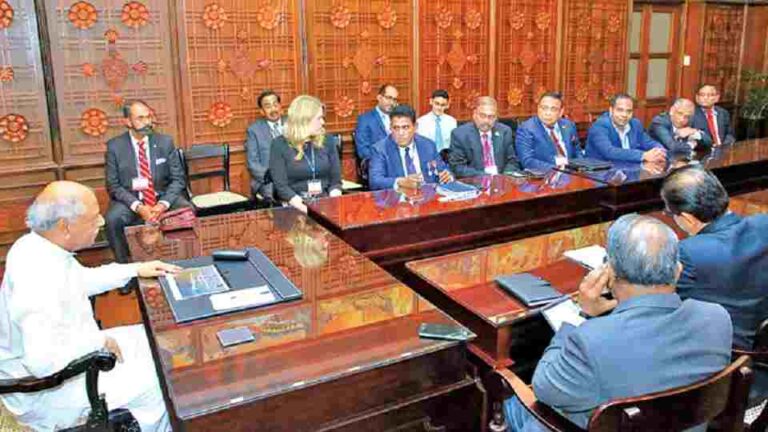
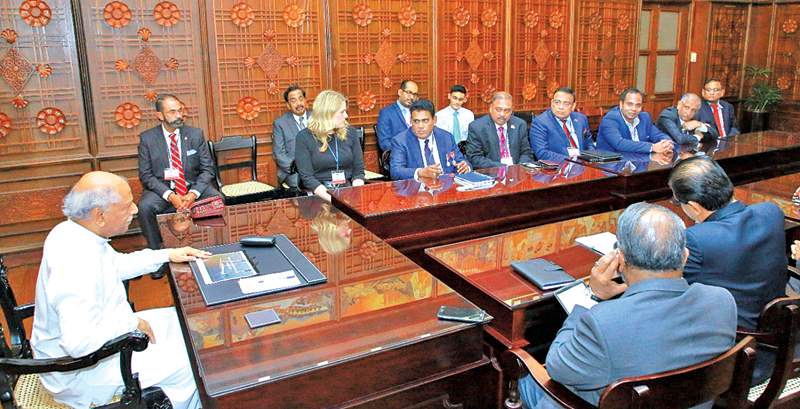
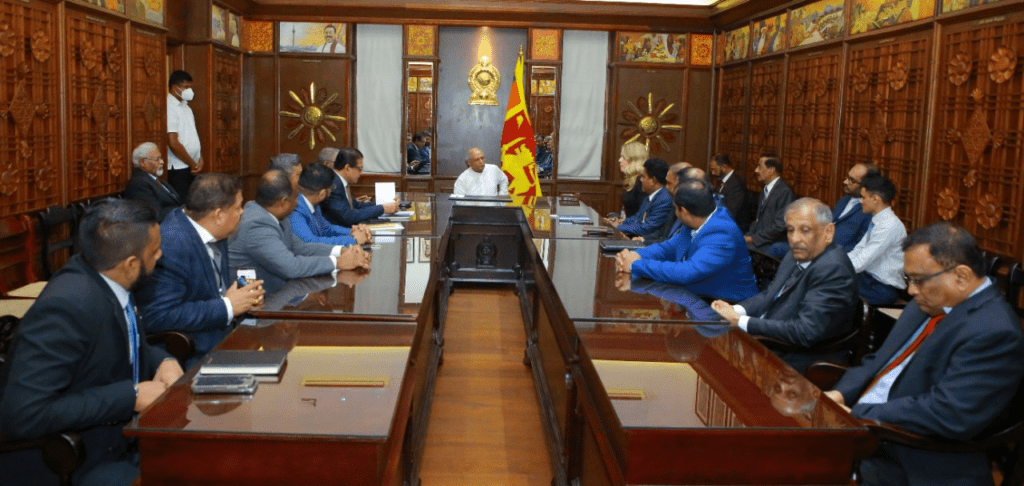
Prime Minister Ranil Wickremesinghe yesterday held separate discussions with the Food and Agriculture Organisation (FAO) Country Representative Vimlendra Sharan and United Nations Development Program Deputy Country Representative Malin Herwig, regarding the current food situation in the country. 

The Prime Minister explained that in view of the threat of a food shortage, a food security program was being compiled by the agriculture department officials. This program is due to be unveiled next month, with the UNDP expressing their support for the initiative.

He stated that the biggest issue currently facing the agriculture sector is the fertiliser and fuel shortage. The Prime Minister also elaborated on the urban agriculture initiative that he had established to try and overcome a potential food shortage. 

The UNDP explained that they were compiling an innovative farming assistance program which would help the farming community overcome the fertiliser shortage.

The FAO also explained that donors had stepped forward to assist the country in the urban agriculture program, and was hopeful that a successful implementation would see more financial support provided. The FAO also stated they were drafting a food crisis response plan that can be enacted in Sri Lanka. 

The Prime Minister explained that within 5-6 months the current agriculture shortages could be salvaged if swift action was taken to address the shortages faced by the farmers.

Meanwhile the International Fund for Agricultural Development (IFAD) together with the Government of Sri Lanka last week signed a financial agreement to launch the Smallholder Agribusiness and Resilience Project (SARP). 

The project aims to address the impacts of climate change on about 40,000 smallholder families, building their resilience and promoting agriculture commercialisation.

Improving rural livelihoods, boosting food security and building climate resilience in the country’s dry zone, are key to enabling Sri Lanka to eradicate persistent pockets of poverty across the country. 

The project development objectives are in line with national priorities – and key to achieving the Sustainable Development Goals.

The six-year project will mobilise climate-sensitive investments and work with smallholder producers to build and expand agricultural activities that are climate resilient and part of inclusive value chains. 

The project will operate in six districts in the dry zone, namely Anuradhapura, Vavuniya, Matale, Mannar, Puttalam and Kurenagala districts. Potential commodities include goats, dairy, chili, and fruits and vegetables, as well as more specialised crops like aloe vera and moringa – a wide range to mitigate the risks of climate change.

Sri Lanka recognises  India as an important source  market for tourism

0

Sri Lanka is to attract more Indian tourists considering its closest neighbour as an important source market The island nation has been a favourite with Indian tourists due to affordability and access. 

Sri Lanka has identified India as an important source market for tourism, the Sri Lanka Tourism Promotion Bureau said adding that in 2021, Indians topped tourist ar­rivals with over 56,000 visitors.

8678 Indian tourists arrived in the island last month out of the total number of travelers of 40560 and the majority of tourists were reported from the UK with 11,539 arrivals, while from Germany, it was 6,088 tourists, and from France, it was 4,038. 

he interest for exploring new places, the rise in purchasing power, availability of direct and low fare international flights are the key drivers for the growth of the Indian travel segment.

Sri Lanka plays a crucial role here as the destination is the No.3 most talked about ‘tropical south east Asian’ travel destination.

The Sri Lanka Tourism Promotion Bureau said that 98% of trips to Sri Lanka were for leisure purposes, mostly visited for wildlife and beaches.

As another result of its continuous effort of promoting Sri Lanka as a potential Tourism destination, Sri Lanka Tourism participated at the SATTE Travel Fair which was held in Greater Noida, Delhi-NCR, India, from 18th – 20th May, 2022, with 65 Sri Lankan travel and tourism companies.

Sri Lanka’s participation was successful for the destination in this year’s SATTE , for it was a collaborative effort of High Commission of Sri Lanka in New Delhi, together with Sri Lanka Tourism Promotion Bureau and 65 travel industry members including SriLankan Airlines, representing Sri Lanka at SATTE 2022, since India is a major source market for Sri Lanka Tourism.

SATTE offers a comprehensive platform to domestic and international buyers and professionals from across the travel, tourism and hospitality industry along with national and State Tourism Boards. 

SATTE is recognized as Asia’s leading travel and tourism exhibition to conduct business, share knowledge, exchange ideas in order to arrive at solution-driven innovations to accelerate the pace of the growth of the industry. 

SATTE has grown in terms of exhibitions and visitors (including international and domestic buyers) and is today the biggest networking forum for the travel and tourism industry in South Asia.

SATTE is an exceptional trade event which is well-supported by the Ministry of Tourism, Government of India National and International Tourism Boards, Indian and International travel and trade associations and organizations amongst others. 1,200+ exhibitors, 35,000+ trade visitors, 800+ VIPs & delegates, 26 State Tourism Boards from 50+ countries attended SATTE 2022.

India has been identified as one of the fastest growing outbound markets in the world. The UNWTO has ranked India as one of the fastest growing outbound markets in the world with the volume of travellers going up by 25% every year.MICE, Incentive, Casino, Wedding and honeymoon, Leisure, Youth, Golf Tours, Ramayanaya, Buddhist pilgrim tours, etc. are the main products Sri Lanka can offer for Indians all year round

Smartphones become a luxury in Sri Lanka with prices soaring

0

  
In the aftermath of Covid19 , several ‘behavioral changes’ in the Sri Lankan consumers have taken place in the country  and the need to be digitally connected is one of them.

  
This era has shed light on how ‘digital connectivity and inclusivity’ should be omnipresent and how digital ecosystems including the use of smartphones  are not a luxury but a necessity.

  
Sri lankans are now  in an era of ‘physical restrictions’, virtual platforms sufficing the need for connection and communication and classifying smartphones as non essential items by the government  has made it difficult  for consumers to buy such phones due to high prices.

  
Sri Lanka smartphone market shrinked as a result of import restrictions imposed by the government pushing prices to sky high, traders and importers said  .  
In the age of rapid technological advancements, smartphones have played a pivotal role in furthering and strengthening digital interdependency
Mobile phone traders and others in the business say that the cost of smartphones will increase by at least Rs. 80,000 since the Government increased taxes.

The Finance Ministry imposed a surcharge tax on many imported goods yesterday (1). Moreover, Value Added Taxes have also been increased by 4% as a move by the Government to increase its revenue.


This increase in taxes eventually leads to an increase in prices of goods. Traders say that normal smartphones now cost more than Rs. 55,000 or Rs. 60,000, while they estimate that in the near future, the cost of a phone will go up to Rs. 80,000 or even Rs. 90,000.


Traders also said that customers tend to not to purchase when they are informed of the prices

.Meanwhile, another trader said that a normal phone cover is usually about Rs. 110, however the price has increased up to Rs. 280 or Rs. 300, yet after this move, a phone cover will not be available even for Rs. 400 or Rs. 500.


The government has also increased the telecommunication levy from 11.25% to 15%.Workers at the Sapugaskanda refinery say that there is a greater risk in restarting the refinery if kerosene cannot be ensured throughout.


Smartphones are also galvanizing day-to-day activities like online classes, online shopping, and e-payments with 43% people accepting to have tried newer things online.


The smartphone industry is looking at a promising avenue. In terms of digital development, Sri Lanka witnessed a speedy process where now the usage of mobile phones has become a common feature among the people.


Smartphone manufacturers are eyeing this opportunity of impending demand for smartphones. Deeper insights into the market reveal that 48%2of the people would be interested in buying products that are manufactured locally.

  
Thus, the vision of ‘Make in Sri Lanka’ and ‘Digital Sri Lanka’ can go hand in hand in reforming the smartphone industry in the coming years.

41st Anniversary Remembrance of the Burning of the Jaffna Public Library

0

“Those who cannot remember the past, are condemned to repeat it. – George Santayana”

JAFFNA PUBLIC LIBRARY 

The Jaffna Public Library was the pride invaluable asset of Tamil people, not only for those who lived in Jaffna peninsula, but also for academics and research-scholars from all around the world.  With a modest beginning in 1933, it grew to become a repository of significant Tamil palm leaf manuscripts, original copies of regionally important historic documents in the contested political history of Sri Lanka and newspapers that were published hundreds of years ago in the Jaffna peninsula. It thus became a place of historic and symbolic importance to the Tamil people.

BURNING DOWN JAFFNA PUBLIC LIBRARY – A CULTURAL GENOCIDE

On 01 June 1981, Jaffna Public Library was reduced to by the premeditated willful and malicious act of then Sri Lankan government with the presence of two cabinet ministers Gamini Dissanayake and Cyril Matthew were stationed in Jaffna to oversee the election process and campaign. They encouraged the police forces and thugs especially brought from south and housed in Duraiappa Stadium under the guise of election duty of the district council election on June 04th. The location of Duraiappa Stadium across a road of Jaffna Public Library and adjacent to the Jaffna Police Station at that time. 

On the 01st of June, at around 10 pm, then Jaffna Municipal Commissioner Mr. C V K Sivagnanam received a call from Mrs Yogendra Duraisamy, the wife of then Government Agent of Jaffna District and their house was within the vicinity of the library, telling him that there were smoke and fire coming around the library and asked him to check up. When he contacted his staff over the phone and they told him that the library has been set on fire. Please find former Municipal Commissioner Mr C V K Sivagnanam’s testimony as video statement here. 

For Tamils, the devastated library became a symbol of cultural genocide. The attack was seen as an assault on their aspirations, the value of learning and traditions of academic achievement. 

Thereafter, a committee was appointed by J R Jayawardena, and one-man committee was headed by Kingly Wickramasooriya, who was the DIG, came to Jaffna and collected evidence from several high-ranking officials and witnesses in Jaffna, including then Jaffna Municipal Commissioner Mr. C V K Sivagnanam, who was threatened to be shot by the police by a road barricade, when Mr. Sivagnanam was rushing in his car after receiving a phone call about Jaffna Library was on fire. Mr.  Sivagnanam had seen the burning library and the policemen in the library area from the location where he was stopped by the police.

Despite of appointing a committee by the government at that time and up to now no action have been taken by any successive Sri Lankan government came to power thereafter, to grant justice to the crime committed by the perpetrators by burning the cultural treasure of Tamil people.  

This shows the clear evidence of Tamil genocidal intent of Sri Lankan state’s policy that it hitherto adapt.

TAMIL PEOPLE WISHED TO RETAIN THE RUINED LIBRARY AS A MEMORIAL OF STRUCTURAL GENOCIDE OF TAMIL PEOPLES’ INVALUABLE INHERITANCE AND TO BUILD ANOTHER IDENTICAL ONE NEARBY

With the motive of eradicating all evidence of genocide, successive governments planned to rebuild and refurbish the ruined Jaffna Public Library against Tamil peoples’ wish of preserving as a living memory of a part of atrocity crimes inflicted on them.. 

During one of the truce negotiations between Chandrika Kumaratunga’s government and the LTTE, the government of Sri Lanka purposely brought the issue of the Jaffna Public Library and a compromise was reached between the negotiating parties for a new library to be built next to the old one. Subsequently, an architectural design for the new library was submitted to the government negotiators.

REFURBISHING & FURNISHING OF THE BURNT DOWN JAFFNA PUBLIC LIBRARY 

Nevertheless, contrary to such a negotiated compromise to retain the burnt library building, President Chandrika Kumaratunga, after militarily occupying the Jaffna district in 1996, undertook to repair & refurbish the old library building, deliberately to erase the scars of the burnt library. 

Among many other atrocities, this enduring psychological scar continuous to traumatise Tamil people and this will never be erasable. —

Best Wishes

S. Sangeeth     

BTF Media Contact

Sri Lanka eyes over $1 bn in FDI

0

These include proposals by Marubeni Corp and India’s Adani Group to set up RE plants on the island, Renuka Weerakone, director-general of the Board of Investment (BoI), said. Marubeni has put forward a proposal to set up an 800 megawatt (MW) solar…

Sri Lanka is aiming to attract well over $1 billion in foreign direct investment this year, an official said on Friday, as the country wrestles with its worst financial crisis since independence in 1948.

These include proposals by Marubeni Corp and India’s Adani Group to set up renewable energy plants on the island, Renuka Weerakone, director-general of the Board of Investment (BoI), told Reuters.

Marubeni has put forward a proposal to set up an 800 megawatt (MW) solar and wind plant while the Adani Group has already completed feasibility studies on a similar 500 MW project that it hopes to wrap up in 18-24 months, she said. Two Chinese companies are also eyeing similar projects.

The Sri Lankan government is expected to revamp legislation governing the energy sector this month, Weerakone said, which would allow large-scale projects to be implemented more smoothly.

“We are optimistic we will meet targets already set for the year,” she said. “Provided the renewable energy projects we have received can get through, we will even over-reach what we have targeted.”

During the first quarter, Sri Lanka attracted $226 million in committed projects, a 16% increase over the same period in 2021, she said.

Overall, the BoI is working on 49 project proposals worth $1.46 billion from countries including India, China, the UK, the United States, and Japan in manufacturing, apparel, services and tourism. About one-third of the projects are expansions of existing investments, Weerakone said.

“Even during the turmoil, we still kept getting applications,” she said. “Most investors are thinking the crisis is something we will get over. They are quite confident we will pull through.”

Economic Times

High ranking Police Officer who allowed Bharatha’s murder the same who allowed assault on GotaGoGama (VIDEO)

0

The high ranking Police officer who had taken no action but waited till Bharatha Lakshman Premachandra and a number of others were shot dead in 2011 was the same person who had allowed the assault on GotaGoGama on May 09, divulged Sumana Premachandra, wife of the slain SLFP politician, speaking to a briefing in Colombo today (04).

Mrs. Premachandra also noted that she is asking the President why Duminda Silva was special to him out of the 9000 people who are spending death row.

She also urged the medical community not to tarnish their good profession by harbouring lying murderers like Duminda Silva.

MIAP

May 09 Unrest: Arrestees up to about 2400

0

45 more suspects were arrested yesterday (03) in connection with the unrest awaken on May 09, said Police Spokesman Nihal Thalduwa.

Accordingly, the number of suspects arrested in connection with the events has increased up to 2393, he added.

MIAP

Debt restructuring veteran Buchheit to address Daily FT-ICCSL-SLID webinar today

0

Prof. Lee Buchheit

Prof. Ulrich Volz

Dr. Manoj Jain


Daily FT and the International Chamber of Commerce Sri Lanka together with the Sri Lanka Institute of Directors, Chartered Institute of Management Accountants UK have organised a webinar on ‘Options for Debt Restructuring in Sri Lanka’ aired live today from 4 p.m. onwards.

This webinar will be broadcast live via the Facebook pages of ICC Sri Lanka, CIMA, and Daily FT.

It will host a number of eminent foreign as well as Sri Lankan experts who are conversant in the subject of Debt Restructuring which is very relevant to Sri Lanka today.

Prof. Lee Buchheit, the crisis debt restructuring veteran, Dr. Manoj Jain of Hector Capital, and Sovereign Debt Specialist University of London Prof. Ulrich Volz will address the webinar, which will be followed by a panel discussion featuring: Investor and Insurance Industry Specialist India R. Ramakrishna, HNB and NDB former CEO/Ceylon Chamber of Commerce Past President Rajendra Theagaraja, former State Minister of Finance Sri Lanka/NDB Bank former CEO Eran Wickramaratne MP, and Keio University – Tokyo Japan Professor Emeritus/Asian Development Bank Institute former Dean and CEO Naoyuki Yoshino.  

The session will be moderated by Daily FT Editor Nisthar Cassim, and ICC Sri Lanka Immediate Past Chairman and SLID Vice Chairman Dinesh Weerakkody. The webinar will be broadcast via: https://facebook.com/events/s/iccsl-webinar/546682120513129/.

DailyFT

Fuel racket during last Festive Season revealed! (VIDEO)

0

The severe fuel shortage occurred during April 11 – 18 was orchestrated in a move to smuggle fuel, divulged Ceylon Petroleum Private Tanker Owners Association.

Speaking to a briefing today (04) Union Co-Secretary Shantha Silva said there had been a racket during the last Festive Season where about 400,000 litres of fuel were being diverted from fuel stations to fraudulent companies.

These stocks were to be distributed to 50 – 60 regular filling stations and had the stocks been properly dispatched, the people may have never been driven into inconvenience as evident during the season, he noted.

Silva also stressed that 250 – 300 fuel tankers were reported to be in service on an average day, but the figure has dropped to 100 – 150 due to a decline in the number of orders. This was mainly due to the reduction in the quantity issued by the Ceylon Petroleum Corporation (CEYPETCO), despite orders being made from filling stations as required, he added.

Such a decision could be carried out due to the shortage of fuel stocks in the country, the Union Co-Secretary Silva went on, adding that accordingly, fuel dispatched to tankers has dropped by 50 – 60 per cent.

In the difficulty in locating dollars to import fuel, the import of fertiliser costs around US $600 million per year and the import of fuel US $500 million per month, as discussed during the discussions with the Prime Minister, he further noted.

MIAP